

Roy Murry, Maintains Innocence
By Edward Snook
Investigative Reporter

Spokane County, WA – Imagine serving a tour of duty with the Army National Guard in the Iraq War. You’re seriously injured in a firefight that involved a bomb explosion. You push through the pain and trauma of your own injuries and successfully extract your partner. You’re awarded a Bronze Star with Valor and a Purple Heart for your conduct. Your injuries are serious enough that your military career comes to an end. You return home to begin the journey of healing and rebuilding your life; the process is overwhelming; you turn to opioids and marijuana to cope. Your desire to serve remains strong, and you decide to get involved in politics. You fall in love and marry, but continue to struggle.
The experience in Iraq has left you with Post-Traumatic Stress Disorder (PTSD). You feel that your wife’s mother and stepfather interfere too much in your marriage, and your relationship with them is awkward. A year and a half into the marriage, you decide it is time to divorce, and your wife moves back home. You begin taking steps to move on and start anew.
There is a horrendous triple homicide in your community. The murder victims are your estranged wife’s mother, stepfather, and brother. You’re stunned and concerned for your wife.
You suddenly find yourself the only suspect in the murders, as well as accused of setting fire to cover up the heinous crimes. You cooperate with law enforcement. After all, you have nothing to hide. Next thing you know, you are living a horrific nightmare worse than what you experienced in Iraq.
This has been the life of 37-year-old Roy H. Murry, and his nightmare continues.
Murry maintains he is innocent of the heinous crimes and that he was wrongfully convicted on Dec. 14. Murry has already served five years of three consecutive life sentences.
After extensively investigating this case, we are left in part with the following questions:

1. Did Spokane County Sheriff’s Detective Kirk Keyser rush to judgment, causing him to have tunnel vision that prevented him from stepping back and considering other suspects and possible motives? There is now no doubt that Murry shouldn’t have been the only suspect.
2. We are currently looking for an alleged drug dealer named Alejandro who was reportedly tied to murder victim John Constable. Constable and Alejandro were said to have had a “bad drug deal.” We have not concluded our investigation into this allegation yet, but one thing is certain – to our knowledge, law enforcement never pursued this significant lead even though it was known at the time of the murders.
3. The jury foreperson was reportedly seen at a restaurant with Detective Kirk Keyser, who was literally the driving force behind Roy Murry’s conviction. The foreperson is reported to be a personal fitness trainer with several “clients” who work for Spokane County at the courthouse and surrounding businesses. This would lead any prudent person to question whether or not there was any collusion.
4. Was Spokane County Prosecutor Larry Haskell motivated to act in self-interest in order to put a notch in his belt, or did he have the interest of justice in mind? After all, this case began just a few months after Haskell took office. Based on the lack of evidence in this case, we’d say he appears to have acted in self-interest. We’d also say that Haskell used circumstantial evidence to convict Murry. We cannot find one piece of factual evidence proving Murry committed the murders.
History
On May 26, at approximately 2 AM, a neighbor reported a blaze at 20 East Chattaroy Road, Colbert, WA, the home of Lisa and Terry Canfield. As firefighters worked, they found Terry Canfield, a 59-year-old lieutenant with the Spokane Fire Department, his wife, Lisa Canfield, 52, and her son, John Constable, 23, fatally shot.
To Spokane County Sheriff’s Detective Kirk Keyser, it must have seemed like an open-and-shut case. Murry’s wife – now known by her maiden name, Amanda Constable – identified Murry as a suspect as soon as she arrived home to the blaze and learned her mother, stepfather, and brother had been murdered. Ms. Constable told law enforcement she intended to get a divorce, and Murry did not take it well. Constable said she “wouldn’t be surprised if Roy killed her family. He would see the killing of her family as a loss of her security and love for the most important thing in her life.” She continued, “Roy would think this would cause her to reconsider ending the marriage and leave Roy Murry as the only person she had for comfort and stability.”
Murry was an avid gun aficionado and was known to exercise his 2nd Amendment-protected rights. Having been in the National Guard and sent to the Iraqi conflict, one would expect Murry to be very knowledgeable about guns and to own several firearms. He also understood the concept of being prepared for natural and manmade disasters. According to the WA Secretary of State (WA SOS), Murry formed Patriot Enterprises, LLC, in July, and the state administratively dissolved it in November.
Murry and Amanda Constable met at a party and began dating shortly thereafter. They married in August — this would be Murry’s second marriage. Unfortunately for the couple, the marriage was troubled from the start. Murry felt his wife’s family interfered too much, making it difficult to have a good marriage.
One of the aspects that would be brought up at trial was that Murry’s wife’s stepdad would not allow him to have firearms when he came onto their property. Although he did not like it, Murry complied, as he always did, with the rules others set for his firearms on their property. As one witness testified, “He [Murry] had mentioned that he was armed. It was concealed on his hip in a holster, so no worries there, you know. And then he [Murry] had asked, you know, “Do you mind if I show it or take it off?” and my supervisor had said, “No, I would prefer you don’t.” And so that’s where that ended. There was no further argument or anything there. He respected that.”
Much was also said at trial about Murry’s wife wanting to leave him, but the reality was that Murry himself was moving on and starting over. Murry’s sister testified that when she saw Murry in March 2015, she thought Roy and Amanda were done with their relationship. Murry was calm about the divorce, and it seemed to be a mutual decision.
The State’s Case
Spokane County Prosecutor Larry Haskell had no direct evidence to convict Murry. The murder weapon was never found, and according to court documents:
 1. Law enforcement went to Murry’s apartment to check on him the day of the blaze. He appeared clean; there was no odor, and his car did not appear to have been used in wet road conditions. He told the lieutenant he had been to Safeway and a vape shop the prior day and showed him the calls with his wife on his cell phone.
2. The state found that Murry posted some songs to social media and conducted internet searches on trioxane, canon fusing, and some music law enforcement found to be of a similar theme. However, trioxane was never found in any evidence from the crime scene (low levels could not be conclusively determined).
3. The state had shell casings, a gas can spout, and a gas can cap from the scene examined for fingerprints, but there was not enough information on any item to be useful.
4. The sole of Murry’s boots was examined and found not to contain the same soil as at the scene.
5. DNA from under Lisa Canfield’s fingernails was tested, and Murry was excluded as a contributor.
6. Murry’s DNA was excluded from the gas spout, flare cap, and the cabin door, which were suspected of possibly being used by the person who breached the scene.
7. DNA testing of some other items from the scene was inconclusive.
8. Only Murry’s DNA was found on fabric removed from his vehicle, and the three victims’ DNA was excluded from this sample. No blood was found on his shoes or boots.
Notice the numerous mentions where “Murry was excluded as a contributor.” The murders were gruesome, reportedly 17 shots in total. The state focused heavily on trioxane, something that was never found in any evidence from the crime scene. Prosecutor Haskell knew he had no evidence yet continued the prosecution and took it through to a conviction. The state claimed it had found magnesium silicone nanoparticles on shell casings from the scene that matched an experimental lubricant called Accudure. A nanoparticle is a small particle ranging from 1 to 100 nanometres in size. Undetectable to the human eye, nanoparticles can have significantly different physical and chemical properties than their larger counterparts. Murry had worked with the professor who developed Accudure and had access to a vial. Murry argued that the science behind the state’s evidence, that nanoparticles consistent with the lubricant Accudure were found on casings from the crime scene, was not generally accepted. Could cross-contamination or another logical explanation account for this sketchy, complicated evidence? The jury never knew because Murry’s public defender failed to call Murry’s expert witness at trial, thinking they had a slam-dunk case.
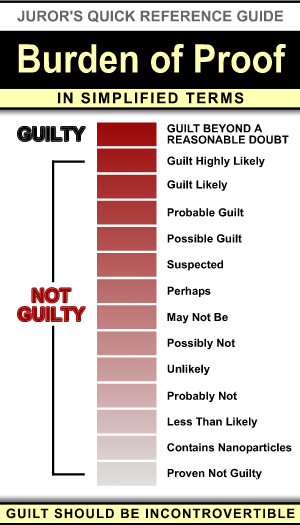
Further, Murry’s defense was riddled with obvious signs of ineffective assistance of counsel. So, with no murder weapon, Murry’s DNA excluded on all accounts, no soil particles on his shoes, no physical evidence whatsoever, the jury convicts. Sometimes you have to wonder what exactly a jury thought was beyond a reasonable doubt, or whether they even knew what beyond a reasonable doubt means!
Roy Murry Investigation Reveals Stunning Details
The US~Observer’s investigation into the Roy Murry case led to a curious discovery… Murry’s wife Amanda, her stepdad, Terry Canfield, and her biological father, Kelly Constable, were practically neighbors. This could be seriously concerning.
In the early days, the Constable household included Kelly, his wife Lisa, daughter Amanda, and twin sons Ryan and John. Kelly and Lisa had issues, and Lisa tried to leave her husband.
After she separated from Kelly, she rented a home from Terry Canfield for herself and her children.
According to court documents, Lisa and Kelly separated in April 2010. In a Mar. 24, declaration, Terry Canfield made the following statement:
“Lisa came to me to rent my home, which I had for rent. After she moved in, I saw that she needed help and I became her advocate. Since I have become her advocate, we have become romantically involved.
In addition to being her boyfriend, I have found myself in a position of caretaker and also as her financial support because her injuries render Lisa incompetent to handle her own affairs. Technically, Lisa is supposed to be renting the home from me. Unfortunately, because of the state of her financial affairs, I have found myself on the short end of rent payments, in addition to assisting Lisa and her twin boys (age 19) with utilities, groceries, and gasoline to get the boys from the home in Chattaroy to school at Spokane Community College.
In my role as caretaker, I manage nearly all aspects of Lisa’s life: from collecting her mail, to making an attempt to pay her bills. Because of Lisa’s condition, she is easily upset and cannot deal with the stress of her financial affairs and also her legal affairs. I have taken a role as her advocate in her legal proceedings.
Kelly used to make $600 bi-weekly payments to Lisa to make up for some of the bills that he used to pay. Even that amount was not sufficient. There are very significant living expenses here related to Lisa and the twins that he should be responsible for paying. He recently suddenly stopped making these payments by withdrawing the money from their joint account after he had already deposited it, which makes Lisa’s situation even worse than it was before.”
A few weeks later, Terry Canfield filed another declaration on Lisa’s behalf. He asked the court to appoint a guardian due to a neurological evaluation. Canfield reiterates in his declaration that:
“I stepped in to help Lisa after seeing that she was having serious problems organizing herself. I met with her and learned she needed a lot of help, and that she had had a series of serious brain injuries. She appears to be well dressed and seems to be able to take care of herself to the average person, however, that is misleading. She cannot organize complicated issues well and has serious memory problems, mixed with anxiety over how to solve these problems. I asked her if I could help her with her family and financial issues since she was having a terrible time with her memory and organization. She agreed and appointed me her Power of Attorney.”
It is clear that while Lisa and Kelly Constable’s divorce was underway, Lisa and Terry became romantically involved. Lisa appointed Terry as her Power of Attorney. The court appointed Amanda Constable to assist her mother, Lisa, with the case.
In a letter dated May 26, Spokane County Superior Court Judge Greg Sypolt wrote, “After the trial had begun, it was determined that the appointment of a guardian for the petitioner was appropriate and necessary. The trial was recessed with the understanding that counsel would be submitting a petition for appointment of a guardian immediately.”
Court records show that the Constable divorce decree was finally issued on June 7, nearly two years after the proceedings began. The court ordered Constable to pay Lisa $1,600 in spousal maintenance. He later filed a Motion for Reconsideration, stating that he had lost his employment. Judge Sypolt denied this motion. By mid-Sept. Constable was in contempt for failing to comply with the Decree of Dissolution filed the previous June. The court entered a judgment for $5,650.00 plus interest for delinquent maintenance for the period from May 15 through September 15.
Lisa Canfield wrote in an October declaration, “From the date of the dissolution, Kelly [Constable] has made it very clear that he would never pay me maintenance, in spite of my health issues. I have a head injury that keeps me from working, and I must rely on others to help me. This, along with the length of our marriage, was the primary reason why Judge Sypolt ordered maintenance. When the court ordered maintenance, I could see it devastated Kelly; he hung his head and could not speak or look up for several minutes. It looked like he just received a life sentence in a criminal case. Since then, he has tried to manipulate the orders, change the property, and simply avoid any semblance of responsibility toward me, citing his job loss as the reason he doesn’t pay maintenance.
Lisa married Terry Canfield on October 29. As Lisa Canfield, she continued the spousal-support action against Kelly Constable. In July, Spokane County Commissioner Anthony Rugel ordered the termination of spousal support because Lisa Canfield remarried. The Commissioner also entered a judgment against Constable for $1,493 in back maintenance.
No further action occurred until Nov. 20, when Lisa Canfield’s attorney, Gary Stenzel, filed a motion asking Kelly Constable to produce the previous three years of financial statements, including tax returns, pay stubs, certificates of title for all vehicles, and more. It was discovered that property still existed from the dissolution decree.
On December 4, Spokane County Commissioner Wendy Colton signed an order that restrained Kelly Constable from “selling, encumbering, hiding or disposing of any personal property he received in the decree.” Colton further found that “During supplemental proceedings, property was discovered that was still in existence from the dissolution decree.”
Seemingly, in order to put a stop to Lisa’s continued court wins and to avoid paying Lisa, on Dec. 16, Kelly Constable filed for bankruptcy in the United States Bankruptcy Court, Western District of Washington, in Tacoma. Constable disclosed assets totaling about $240K and liabilities just under $417K. The Constable residence at 516 E Chattaroy Road in Colbert, WA, where Lisa and Kelly raised Amanda, John, and Ryan, was reported abandoned and in foreclosure.
Kelly Constable clearly had a confrontational relationship with his ex-wife Lisa Canfield.
According to court documents, just five months later, bullets were removed from Lisa Canfield’s upper body, and up to twelve shots were determined to have been fired at her; she had cuts on the underside of her arm, injuries to her hand, and DNA under her fingernails, consistent with self-defense. Her legs were badly burnt. John Constable had four bullets in his upper body. Bullets and bullet fragments were also removed from Terry Canfield.
Should Detective Keyser have looked past Roy Murry to Kelly Constable, or perhaps someone associated with Constable, as a suspect? Given their past history, their close living proximity, and the concentrated egregious nature of Lisa’s wounds, it stands to reason that the connection should have been investigated, especially in light of the lack of evidence pointing at Murry.
Special Responsibilities of a Prosecutor
The Washington State Bar Association (WSBA) Rules for Professional Conduct (RPC) Rule 3.8 assigns special responsibilities to prosecutors. A prosecutor serves as a minister of justice, not simply as an advocate. This responsibility carries specific obligations to ensure the defendant receives procedural justice and that guilt is determined on sufficient evidence. RPC 3.8(g) states:
“When a prosecutor knows of new, credible, and material evidence creating a reasonable likelihood that a convicted defendant is innocent of the offense of which the defendant was convicted, the prosecutor shall:
1. promptly disclose that evidence to an appropriate court or authority, and
2. If the conviction was obtained in the prosecutor’s jurisdiction,
a) promptly disclose that evidence to the defendant unless a court authorizes delay, and
b) make reasonable efforts to inquire into the matter, or make reasonable efforts to cause the appropriate law enforcement agency to undertake an investigation into the matter.”
Let this sink in… Remember, Lisa Canfield had DNA under her fingernails. It was not Roy Murry’s DNA. So how could Murry be the perpetrator? At the very least, it shows that someone else contributed to that DNA, and that someone is out there right now. Why isn’t anyone other than the US~Observer looking for this person? Does getting a conviction suddenly invalidate the hard evidence? Do DAs get to just sit back with a clear conscience when there is more than enough evidence to suggest others were involved or that someone other than Murry committed the murders? No, we won’t let them.
Roy Murry was vilified by his estranged wife’s ire. He was let down by the justice system and Detective Kirk Keyser’s inability to adequately investigate a murder case. Prosecutor Larry Haskell’s drive to get a conviction, be damned the evidence supporting Roy Murry’s innocence, led to a jury turning a blind eye to reasonable doubt. Those facts could mean the real murderer may still be at large. That alone should make a reevaluation of Roy Murry’s conviction a top priority.
Editor’s Note: If you have any information regarding the deaths of Terry Canfield, Lisa Canfield, and John Constable, please call the US~Observer immediately – 541-474-7885. Be responsible and realize that an innocent man could be sitting in a prison cell day after day. Someone knows the truth, and they have an absolute obligation to come forward and clear their conscience. Whoever left their DNA under Lisa Canfield’s fingernails is still at large, and they obviously were involved in the attack and subsequent murders. Reasonable doubt? Absolutely!
After reading this article, it should be vividly clear to any reader that, had the US Observer been involved in the murder investigation prior to conviction, there would have been no conviction of Roy Murry.